Choosing a hair-removal laser begins with your current skin tone, hair colour and thickness, treatment area, and recent sun exposure. Alexandrite and long-pulsed Nd:YAG are tools with different characteristics, not competing guarantees. Device settings, cooling, and the experience of the treating team also affect safety. The realistic aim is a lasting reduction in hair growth, sometimes with maintenance treatment, rather than a promise that every hair will disappear permanently.
How does laser hair removal work?
Pigment in hair absorbs light energy that becomes heat and affects the follicle. Hairs are not all in the same growth phase, so treatment usually requires spaced sessions. Skin pigment can absorb energy too, which is why choosing a suitable approach matters. Dark, coarse hair behaves differently from white, blonde, or very fine hair. The response in one body area should not be treated as a prediction for every other area.
Alexandrite and Nd:YAG: the general distinction
Alexandrite
Alexandrite can be effective in selected patients, particularly when there is a suitable contrast between the hair and skin. Its interaction with pigment requires greater caution in darker or recently tanned skin. A photograph is not enough to decide suitability. The clinician assesses the skin at the time of treatment and considers other risk factors. Settings that were tolerated before a holiday should not automatically be repeated after a change in skin colour.
Long-pulsed Nd:YAG
Long-pulsed Nd:YAG is often considered for darker skin because its characteristics can help reduce competing absorption in the skin surface compared with some other options. It can still cause burns or pigment changes. The word YAG alone does not establish that every operating mode is suitable for hair removal. The actual device, pulse type, settings, and cooling need to be selected by a trained professional. There is no universally best choice for all patients.
What should be assessed first?
The consultation considers natural and current skin colour, hair characteristics, previous burns or pigmentation, medicines and supplements, and skin disease in the intended area. Mention recent tanning and tanning products, as well as relevant cold-sore history. Rapidly developing unwanted hair with other symptoms may need a medical assessment. A test area may be useful, but it cannot guarantee that every treated site will react identically or rule out a later reaction.
- Ask why the proposed technique fits your skin and hair at this visit.
- Discuss pregnancy, possible pregnancy, breastfeeding, and medicines before deciding whether to proceed.
- Get clear instructions about shaving, root-removal methods, and timing between sessions.
- Find out how to contact the team if a burn or unexpected reaction develops.
Preparation and the appointment
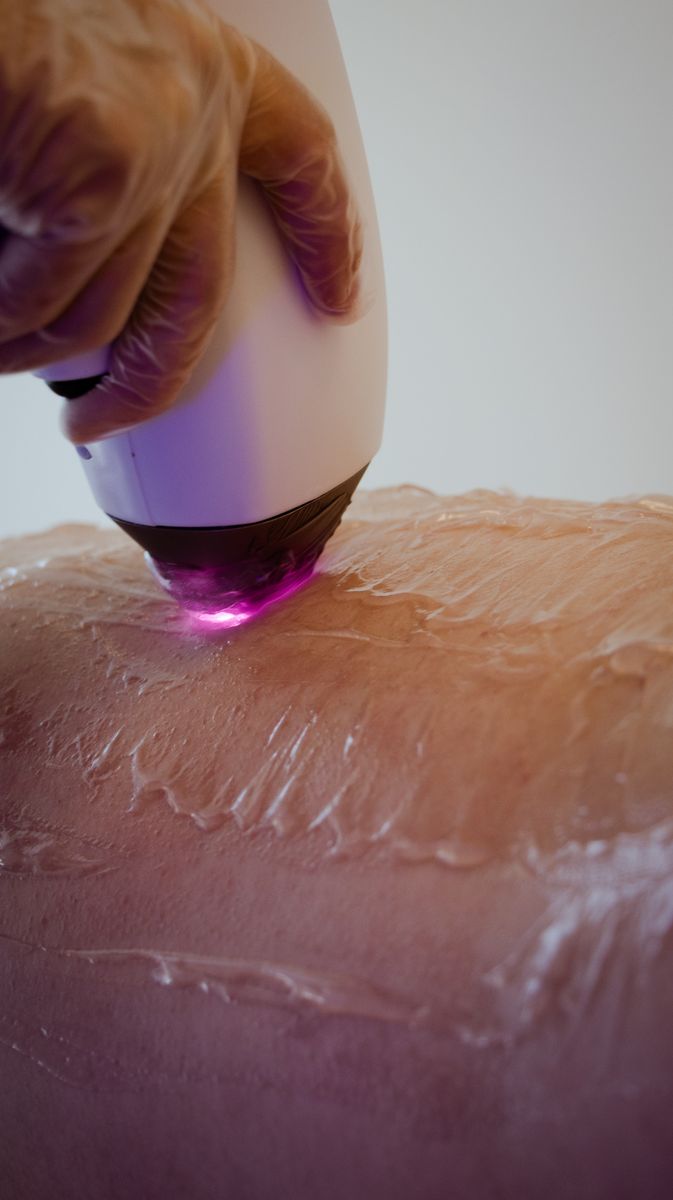
Avoid tanning and unprotected sun exposure. Follow the treating team's instructions about shaving and stopping plucking or waxing. Do not apply anaesthetic cream over a large area on your own initiative. Appropriate eye protection is essential during treatment, and cooling depends on the equipment and protocol. Report unusual pain immediately: pain intensity is not a measure of treatment quality, and increasing energy is not a goal in itself.
Temporary redness or swelling around follicles can occur. Treat the skin gently and follow instructions about sun protection and permitted products. Do not scrub the area to speed hair shedding. At subsequent visits, the response should guide adjustments to timing or treatment. The number of sessions depends on the area, growth pattern, and individual factors, so an estimated range with reassessment is more meaningful than a fixed promise made before examination.
Limits and risks
Possible complications include burns, blisters, altered pigmentation, and occasionally scarring or infection. Some hair may persist or return, particularly in hormonally influenced areas. Authorisation of a device for one use does not make every setting suitable for every skin tone or body site. This is general educational information; the clinic's actual device model and specifications must be confirmed before attributing specific features or device imagery to it.
Frequently asked questions
Is Nd:YAG automatically safe for every darker skin tone?
No. It may be an appropriate choice, but current skin condition, settings, cooling, and professional assessment remain essential.
Will white hair respond as well as dark hair?
Hair with little pigment usually responds poorly. The clinician should assess colour and thickness and explain realistic alternatives and expectations.
Book a laser consultation to discuss a suitable technique, preparation, and follow-up. This article provides general information and does not specify individual treatment settings.
Sources and further reading
DermNet — Alexandrite laser treatmentDermNet — Nd:YAG laser treatmentDermNet — Laser therapy in skin of colourAAD — Laser hair removal FAQsAAD — Laser hair removal preparationDermNet — Lasers in dermatologyThis information is educational and does not replace an individual medical assessment. Results and suitability vary.