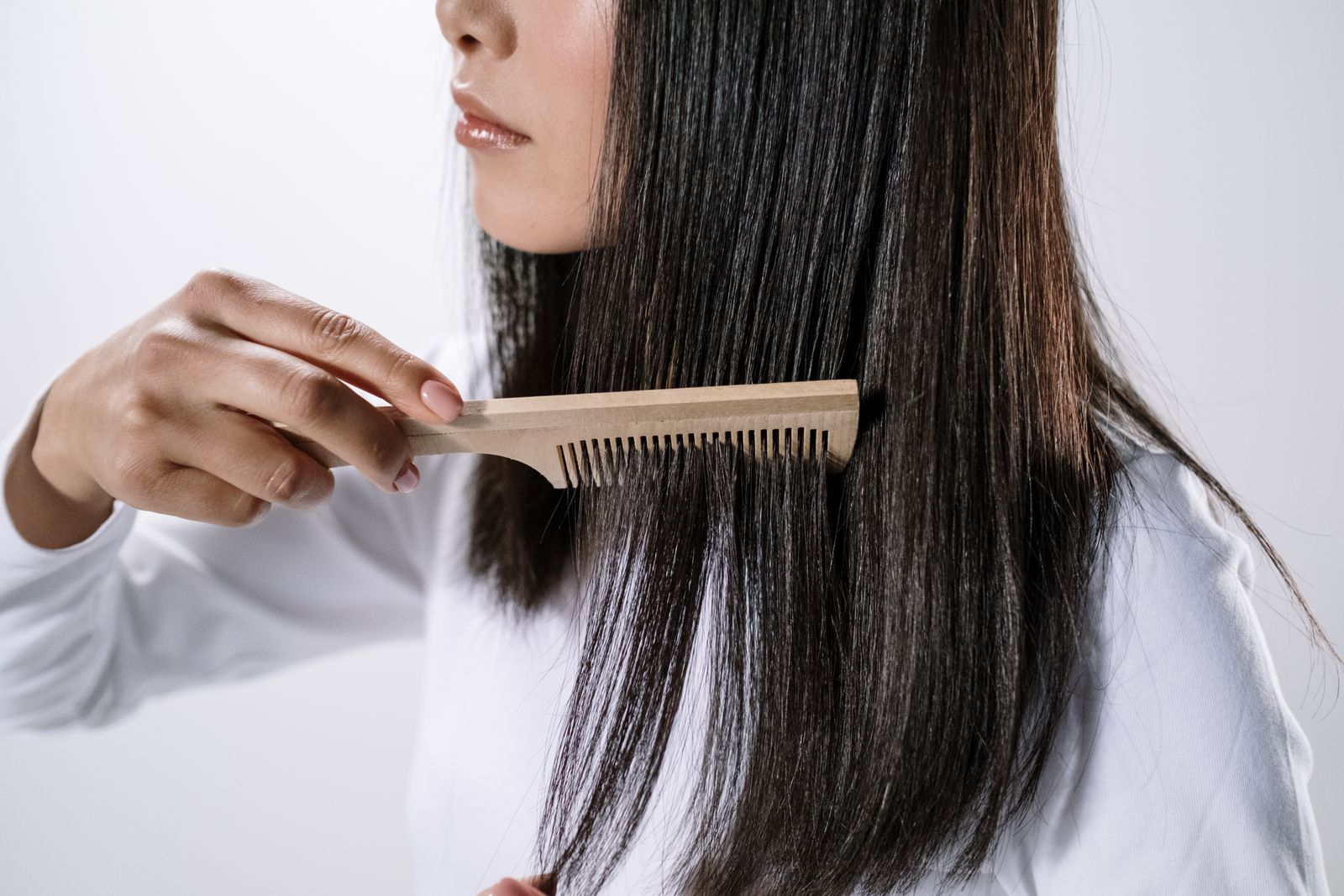
More hair on your brush, a widening part, and a receding hairline can describe quite different problems. The amount seen on wash day cannot establish the cause by itself. A useful assessment considers the pattern, timing, scalp symptoms, and changes in health before deciding whether treatment is needed. The aim is a clear explanation and a realistic plan, rather than a package of procedures for every person who notices thinning.
Shedding, breakage, and thinning are different
Shedding involves a hair leaving its follicle as part of the growth cycle. Breakage affects the shaft, often leaving hairs of uneven length. Gradual thinning may occur because individual hairs become finer. These changes can coexist, so a photograph or home hair-counting test cannot reliably separate them. Describe what you notice in practical terms: a smaller ponytail, visible scalp under the same lighting, short broken hairs, or a new patch without hair.
Common patterns in women
Increased shedding after a trigger
Telogen effluvium can follow illness, fever, surgery, substantial weight loss, or significant physical or emotional stress. The shedding may begin a few months after the event, making the preceding months more useful to discuss than the last few days. It often improves after the trigger resolves, but visible density takes longer to recover. Continued shedding, new patches, or an unexpected course should prompt reassessment rather than an assumption that every episode is temporary.
Inherited thinning and repeated tension
Female pattern hair loss commonly causes a gradually widening part and reduced density across the top of the scalp. Family history can be informative, but an obvious affected relative is not essential. This diagnosis does not automatically mean abnormal hormone levels. Repeated pulling from tight hairstyles or extensions is a different problem: traction can damage follicles and may become permanent if continued. Reducing tension is therefore part of treatment, not simply a styling preference.
Postpartum and other medical causes
Changes in the hair cycle after childbirth can produce noticeable temporary shedding. Many women recover their previous fullness over time. However, persistent loss or additional symptoms deserve assessment rather than being attributed to childbirth indefinitely. Iron deficiency, thyroid disease, certain medicines, alopecia areata, and inflammatory scalp disorders are other possibilities. Do not stop prescribed medicine because you suspect it affects your hair; discuss the concern with the clinician responsible for that treatment.
Make the consultation useful
Bring a timeline and any older photographs that show your usual part and hairline. Mention recent illnesses, restricted diets, medicines and supplements, pregnancy or breastfeeding, menstrual changes, and unwanted facial or body hair. Examination may include a magnified view of the scalp. Targeted blood tests or, occasionally, a small scalp biopsy can answer particular diagnostic questions. A fixed panel of tests is not necessary for everyone, and testing should have a clear purpose.
- Record itching, pain, scaling, or pustules alongside the areas of thinning.
- Bring supplement labels and product names so the discussion is based on actual ingredients.
- Agree on consistent photographs and a review date instead of judging progress daily.
What can a treatment plan achieve?
The plan may involve correcting a contributing condition, treating scalp inflammation, changing damaging hair practices, or using treatment appropriate for inherited thinning. Some treatments need continued use to maintain their benefit. Pregnancy plans can change which options are appropriate. Supplements are not a universal solution: deficiency should be assessed, and excess intake can be harmful. Discuss the practical goal, expected assessment period, ongoing costs, and possible adverse effects before starting.
A useful follow-up looks at more than the number of hairs in the shower. It asks whether shedding is settling, whether the part is stable, and whether the chosen plan is tolerable. If the result is disappointing, the next step is to review the diagnosis and adherence together, not automatically add more products. Hair loss can also affect confidence and wellbeing; this deserves to be discussed without embarrassment.
Frequently asked questions
Will cutting my hair stop root-level hair loss?
A haircut may make care easier or create a fuller appearance, but it does not treat a disorder within the follicles. Styling choices and medical treatment have different roles.
Do visible gaps mean I need growth injections?
No. A diagnosis comes first. Some conditions require treatment of inflammation or a specific deficiency, and some improve without a procedure. Any proposed session needs a clear rationale.
Book a hair and scalp assessment to discuss the pattern you have noticed and a suitable follow-up plan. This article provides general education and does not diagnose an individual cause.
Sources and further reading
AAD — Female pattern hair lossDermNet — Telogen effluviumDermNet — Traction alopeciaAAD — Hair loss in new momsAAD — Hair loss causesNHS — Hair lossDermNet — Female pattern hair lossThis information is educational and does not replace an individual medical assessment. Results and suitability vary.