Scalp symptoms deserve the same attention as changes in hair density. Flaking does not always mean ordinary dandruff, and several conditions can look similar while needing different treatment. Inherited thinning can also coexist with an itchy scalp. Assessment aims to understand the skin and follicles together, rather than assuming that one shampoo or cleansing session will solve every concern. The pattern, associated symptoms, and response to previous treatment all provide useful clues.
Common conditions to distinguish
Dandruff and seborrhoeic dermatitis
Dandruff is a common form of scalp scaling. Seborrhoeic dermatitis may also involve redness and itching around the eyebrows, sides of the nose, or ears. Several factors contribute, including the skin's response to yeasts normally present on it; it is not simply evidence of poor hygiene. Symptoms often recur, so a maintenance plan may be useful. The choice of scalp preparation should take inflammation, hair type, and tolerability into account.
Scalp psoriasis
Psoriasis may produce thicker, well-defined patches that extend beyond the hairline. Nail changes or patches elsewhere can help with diagnosis, although overlap with seborrhoeic dermatitis occurs. Forcefully lifting scales or repeatedly scratching can aggravate the scalp and contribute to breakage or temporary shedding. Treatment focuses on controlling inflammation and using a preparation that can reach the skin through the hair. Scale colour alone cannot identify the condition reliably.
Fungal infection and folliculitis
Scalp ringworm can produce scaly patches with broken hairs. It is particularly common in children but can affect adults. A painful inflammatory swelling needs prompt assessment. Because infection involves the hair, shampoo alone is not adequate treatment; the clinician may examine samples and prescribe an appropriate systemic treatment. Small itchy or tender pustules around follicles suggest a different group of problems called folliculitis, which can have several causes.
If a fungal infection is suspected, avoid sharing combs, hats, or towels and follow advice about checking close contacts. Do not use an unprescribed steroid mixture to hide the rash. Do not squeeze scalp pustules. Some folliculitis is superficial, but deeper forms can damage follicles and leave scars. The important distinction is the underlying condition, not simply whether a bump looks like a facial spot.
Could a hair product be involved?
Burning or itching after a dye, straightening product, oil, or shampoo may reflect irritation or allergic contact dermatitis. Record the timing and retain the ingredient list. Stop the suspected product and seek assessment if symptoms persist; selected cases need patch testing. Natural does not mean non-allergenic. Trying several new products at once makes it harder to identify the trigger and can turn a manageable problem into an unclear sequence of reactions.
What happens at an assessment?
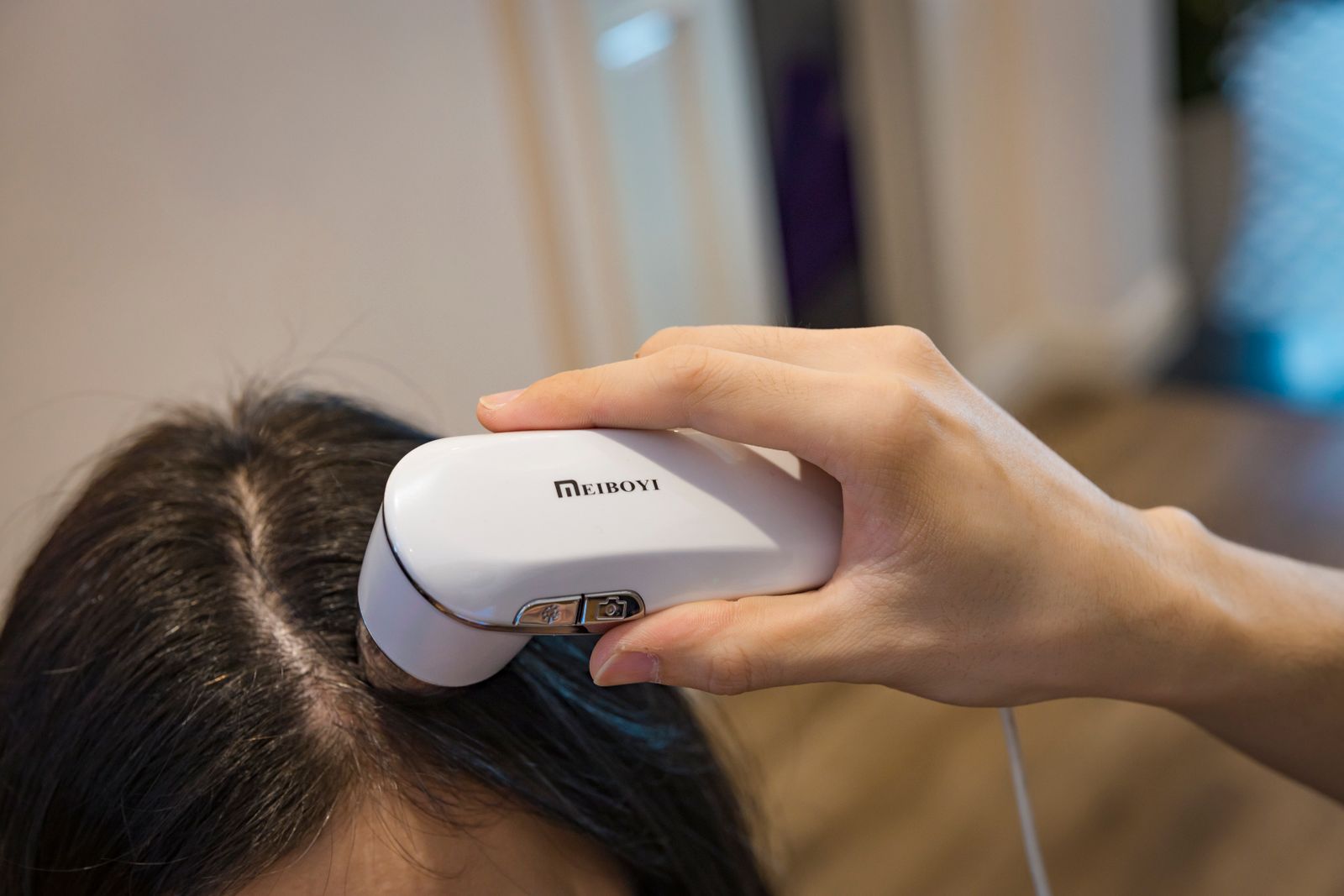
Useful details include when symptoms began, whether they affect the whole scalp or distinct patches, and whether there is pain, discharge, or hair loss. Mention similar symptoms in household members and bring the names of treatments already tried. Examination may include the skin, nails, and a magnified scalp view. A swab, fungal test, or biopsy is needed only when it helps answer a specific question; these are not automatic tests for everyone.
- Clean gently and avoid sharp tools or fingernails for removing scale.
- Ask when it is appropriate to restart colouring or chemical straightening after inflammation.
- Separate the goal of calming the scalp from the goal of increasing hair density.
- Request clear instructions for applying treatment through the hair and arranging follow-up.
When should assessment not wait?
Shiny areas, painful or burning hairline recession, or associated eyebrow loss deserve prompt attention because some disorders cause scarring. Persistent symptoms despite appropriate treatment or a non-healing sore also need examination. Not every bald patch is inflammatory, but early recognition can matter when follicles are at risk. Waiting for another untested mixture to work may delay the treatment that is actually needed.
Frequently asked questions
Does dandruff cause permanent baldness?
Simple dandruff does not mean follicles have been destroyed. However, marked inflammation, pain, or bald patches should not automatically be labelled dandruff and need an appropriate diagnosis.
Should I keep changing shampoos?
Not necessarily. Understanding the condition, correct application, and review period is more useful. Repeatedly changing several products may increase irritation and obscure the response.
Book a hair and scalp assessment if symptoms persist or accompany a change in density. This article offers general information to prepare for a consultation; it does not replace an examination.
Sources and further reading
DermNet — Seborrhoeic dermatitisDermNet — Scalp psoriasisDermNet — Tinea capitisDermNet — Scalp folliculitisAAD — Reasons for an itchy scalpDermNet — Diagnosis of scalp rashesThis information is educational and does not replace an individual medical assessment. Results and suitability vary.